
Fast Blog Post Editing Tips: Streamline Your Workflow for Quicker Publishing

Photo by Nick Morrison on Unsplash
Every blogger knows the feeling: you spend hours pouring your ideas onto the screen, only to realize that the hardest part of the process is still ahead. Editing can easily drag on longer than drafting itself, leading to publishing bottlenecks and frustration. However, learning how to clean up your drafts efficiently is the secret weapon of high-output content creators. By integrating specific fast blog post editing tips into your production routine, you can polish your drafts in a fraction of the time without sacrificing the quality search engines and readers demand. To truly optimize your workflow, it helps to combine structural editing strategies with smart writing habits, such as the ones found in our guide on strategies to accelerate your writing speed.
In this comprehensive guide, we will break down actionable editing techniques designed to optimize your editorial process, clear your publishing backlog, and keep your content crisp, readable, and highly engaging.
Why You Must Separate Writing and Editing
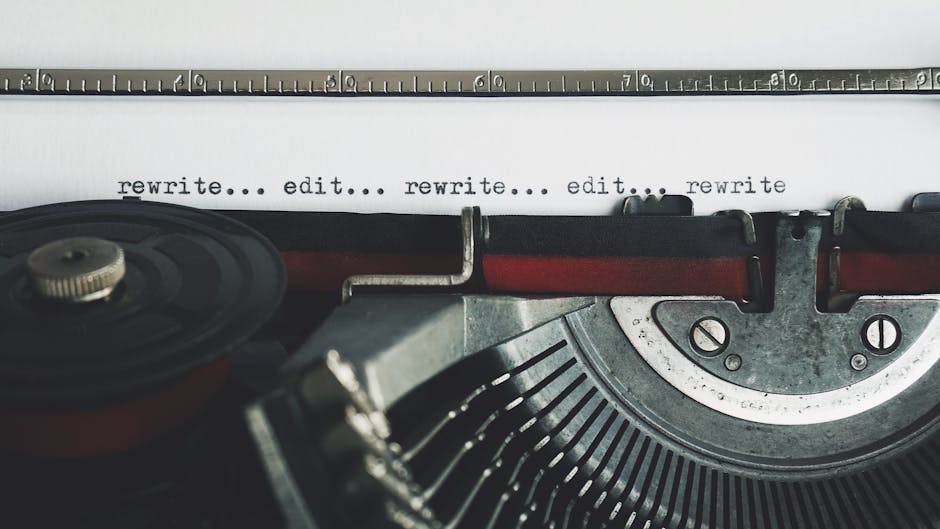
Photo by Suzy Hazelwood on Pexels
The single biggest mistake writers make is trying to edit while they write. Correcting typos, adjusting sentence structure, and second-guessing your word choices mid-draft is a cognitive trap. This habit forces your brain to constantly switch between two entirely different modes of thinking: the creative, generative phase (writing) and the critical, analytical phase (editing).
When you write and edit simultaneously, you disrupt your creative flow state. This back-and-forth transitions your brain into a state of friction, causing what productivity experts call "directed attention fatigue."
By contrast, decoupling these phases allows you to draft with momentum, knowing that you will polish the piece later. Give yourself permission to write a messy first draft. Once the ideas are safely on the page, you can transition into editing mode with a clear, focused mind, applying targeted editing workflows to refine the structure and tone.
The Structural Pass: Fast Blog Post Editing Tips for Flow and Focus

Photo by Amsterdam City Archives on Unsplash
Once your draft is complete, do not jump straight to correcting punctuation. Instead, start with a high-level structural pass. This structural phase ensures that your post delivers on its promise, maintains a logical progression, and remains focused on the primary search intent.
Adopt a Modular Editing Approach
Rather than editing your article as one overwhelming wall of text, use a "chunking" method. Approach your blog post section by section, starting with your subheadings. Ensure that each H2 and H3 heading logically transitions to the next. If a section does not actively support the main topic of your post, it is a candidate for removal. Modular editing prevents you from getting bogged down in minor details before you have even established a solid structural foundation.
Strip the Fluff and Tangents
When writing a first draft, it is natural to over-explain concepts or drift into adjacent, off-topic ideas. During your structural pass, ruthlessly cut redundant paragraphs, repetitive phrases, and anecdotes that do not serve the reader. A tighter, more cohesive post keeps readers on the page longer and sharpens your overall value proposition. Instead of aiming for a specific word count, aim for maximum informational density.
Stick to Proven Formatting Structures
If you find yourself rearranging paragraphs repeatedly, you may have strayed from a clear organizational framework. Save editing time by utilizing simple, established structures such as "how-to" guides, listicles, or problem-and-solution formats. These frameworks keep your writing disciplined and make structural editing incredibly straightforward, as any section that breaks the established pattern will immediately stand out.
Polishing the Page: Fast Blog Post Editing Tips for Better Readability

Photo by Nadiia Ganzhyi on Unsplash
Modern internet readers do not read word-for-word; they scan. If a visitor lands on your blog and is greeted by a dense block of text, they are likely to click away immediately. Your editing workflow must prioritize visual formatting and readability to accommodate mobile users and scanning readers.
Break Up Walls of Text
During your editing pass, look for paragraphs that exceed three or four sentences. Break these up into smaller, easily digestible chunks. White space is your friend—it gives the reader’s eyes a place to rest and makes the content feel highly accessible.
Use Visual Signposts
Incorporate formatting elements that guide the reader down the page. This includes:
- Bullet points and numbered lists: Excellent for presenting sequences, step-by-step instructions, or itemized details without cluttering your narrative.
- Bold text: Use bolding strategically to highlight key concepts, main takeaways, or action items. This allows scanners to extract the core value of your post in seconds.
- Descriptive subheadings: Ensure your subheadings clearly communicate what the following section is about, rather than relying on vague or overly clever titles.
The Final Polish: Fast Blog Post Editing Tips to Ensure Quality
With your structure solid and your formatting optimized, it is time for the final polish. This phase is dedicated to catching spelling mistakes, awkward sentence structures, and subtle grammatical errors that might erode reader trust.
Leverage the Power of the "Read Aloud" Technique

Photo by Michał Parzuchowski on Unsplash
When you read your own writing silently, your brain automatically fills in missing words and corrects typos because it already knows what you intended to say. Reading your draft out loud forces you to slow down and process every syllable. This technique is incredibly effective for identifying:
- Clunky or overly long sentences that cause you to run out of breath.
- Rhythmic issues and repetitive sentence beginnings.
- Awkward phrasing that sounds unnatural.
If you struggle to read a sentence smoothly, your reader will struggle to understand it. Rewrite it immediately for clarity.
Utilize Automated Editing Tools

Photo by Daniil Komov on Pexels
Do not rely solely on your eyes to catch technical errors. Integrate automated spelling, grammar, and style checkers into your routine to handle the mechanical heavy lifting. Tools like Grammarly or Hemingway Editor can instantly flag passive voice, overly complex sentences, and common spelling mistakes. This automation allows you to focus your mental energy on high-level concerns like tone, clarity, and engagement.
Traditional vs. Streamlined Editing Workflow
To visualize how these strategies compress your timeline, let us look at how a streamlined approach compares to traditional, less efficient editing methods.
| Workflow Parameter | Traditional Editing (Slow) | Streamlined Editing (Fast) |
|---|---|---|
| Cognitive Approach | Editing while writing; stopping constantly to fix typos. | Decoupled phases; drafting freely first, editing later. |
| Process Direction | Bottom-up (fixing commas before structuring ideas). | Top-down (structural passes first, micro-polishing last). |
| Formatting | Applied as an afterthought, leading to manual adjustments. | Built directly into the editing pass via headers and bold text. |
| Proofreading | Silent reading (prone to missing repetitive words). | "Read aloud" technique and automated grammar sweeps. |
| Time Investment | High fatigue; often taking 2+ hours per draft. | Low fatigue; completed in focused, 15–30 minute passes. |
Building an Efficient Editing Checklist
To keep your speed consistent, compile a standardized checklist that you can run through before hitting publish. Having a structured routine ensures that you do not miss any critical steps while maintaining a high publishing velocity.
- The Promise Check: Does the introduction immediately address the headline’s promise and outline the value the reader will receive?
- The Structural Sweep: Are your H2 and H3 subheadings organized logically? Do they flow naturally from one point to the next?
- The Readability Test: Are your paragraphs short and punchy? Have you used bullet points and bold formatting to aid scannability?
- The Fluff Reduction: Have you removed redundant phrases, repetitive sentences, and off-topic tangents?
- The Audio Review: Have you read the draft aloud (or used text-to-speech software) to verify the rhythm and natural flow of the prose?
- The Link and Meta Check: Are all internal and external links functional and set to open correctly?
To streamline your overall publication pipeline, consider managing your workflows on a unified system. For example, utilizing the publishing solutions at wp-publisher.com can help automate formatting, layout, and scheduling. If you need assistance configuring your site to support rapid content delivery, you can explore our detailed documentation resources to optimize your WordPress setup.
Prioritizing Quality Over Quantity
As you refine your editing workflow, keep in mind that speed should never come at the cost of value. Search engines and readers alike prioritize helpful, high-quality content over thin, error-prone posts. The goal of fast editing is not to cut corners, but to eliminate the friction and inefficiencies that slow your productivity down.
By separating your drafting and editing phases, leveraging structured formatting, and following a repeatable checklist, you can consistently publish polished, high-impact blog posts in a fraction of the time. Implement these workflows today to make your content creation process simpler, faster, and far more rewarding.